Un jardín que surgió de los escombros
Un jardín que no quisimos comprar hecho.
Once pasos de trabajo. Las plantas solo en el octavo. Los huéspedes ven calma — nosotros sabemos qué hay debajo.
Un jardín vivo
No solo un resultado acabado. Un lugar donde ocurre la vida.
Esta foto 360° es personal — niños, luz, una casa amarilla y caminos por los que alguien acaba de correr. Mire a su alrededor. Así queremos que se sienta el jardín cuando hay huéspedes.
Foto 360° interactiva
Mire a su alrededor en el jardín
Arrastre con el ratón o el dedo — como si estuviera en medio del patio.
Cargando el recorrido…
Terrazas y apartamentos
Los cinco apartamentos tienen acceso al jardín — tres mediante su propia terraza, dos directamente a asientos en el jardín.
Shared terrace
Golden Balance
Shares the terrace with Evening Elegance, but each apartment has its own table and chairs. Access directly from the garden.
Shared terrace
Evening Elegance
Glazed doors to the garden, shared terrace with Golden Balance — privacy is held by the garden itself.
Private terrace · ~10 m²
Noble Contrast
The only private terrace in the house. Railings set into the posts so there is room left for luggage too.
Garden access
Gentle Harmony & Comfort in Muted Tones
No private terrace, but direct access to the garden and its seating — for example the chairs under the lime tree.
Primera impresión
En el jardín encontrará esto: asientos tranquilos, verde, caminos, terrazas y luz.
Esa es la capa que el huésped percibe al instante — un lugar acabado, no un proyecto técnico. Puede sentarse, pasear por el jardín, quedarse fuera por la noche bajo una luz suave.
Pero esa sencillez está aquí porque debajo hay once pasos de trabajo que no se ven a primera vista. Los describimos más abajo — no como guía paso a paso, sino como prueba de que se puede hacer con las propias manos.

Cómo se hizo el jardín
A primera vista un parterre. En realidad once pasos de trabajo — y las plantas solo son el octavo.
Casi todo lo hicimos nosotros. Lo único que encargamos fue el plan de plantación de la arquitecta paisajista Vlasta Hábová — época de floración, crecimiento gradual y perspectiva a cinco años, no solo este año. El resto fue trabajo manual, no un proyecto llave en mano.
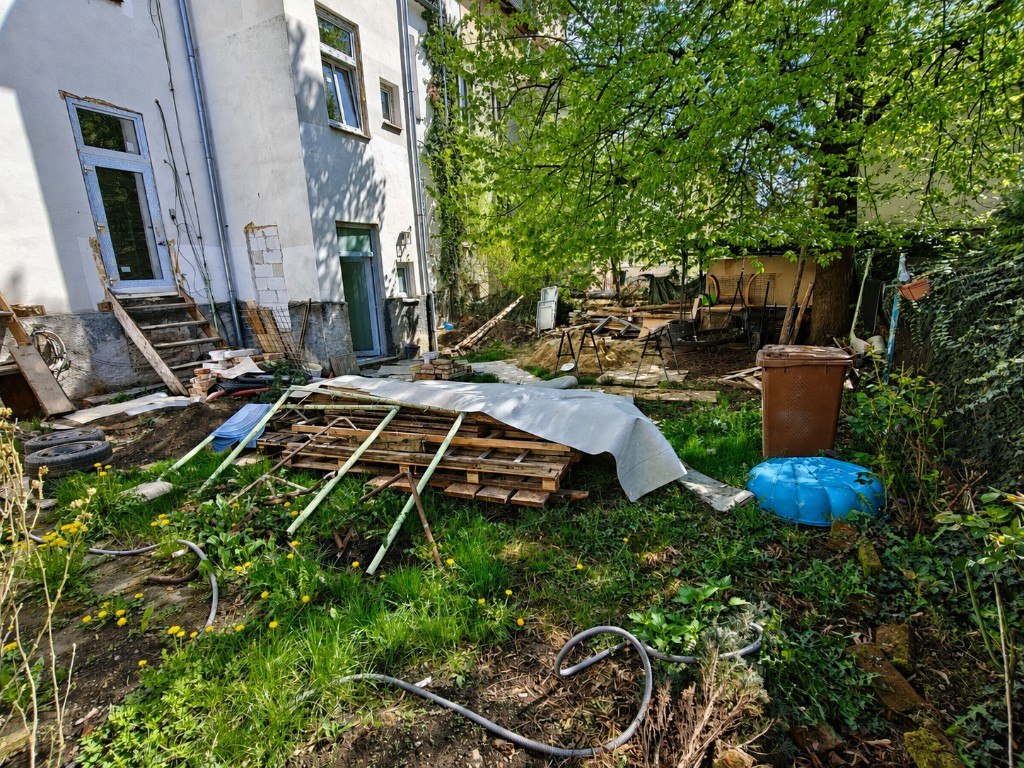
First, it had to be cleared.
Before the first plant went into the ground, more than twenty tonnes of old rubble were carried out through the house — bucket by bucket. Unromantic, but that is where everything began. Without a clean plot, nothing else makes sense.
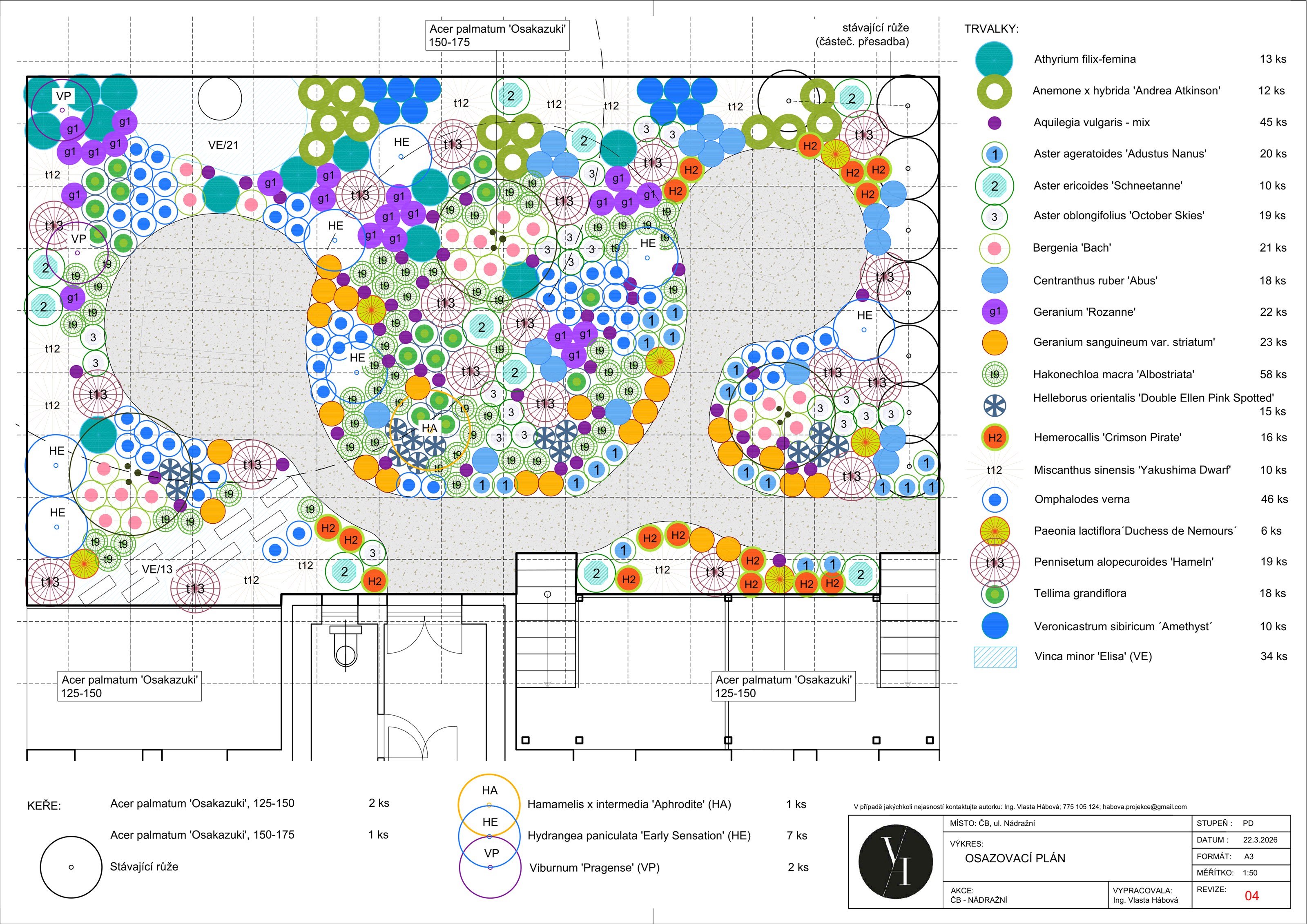
The only thing we had designed for us.
A planting plan by garden architect Vlasta Hábová — flowering times, gradual growth, and a five-year outlook, not just this season. A plan is cheaper than rebuilding a finished garden. Everything else was handwork.
Water first of all.
Right after the plan came water — three retention tanks linked to the roof downpipes, catching rain before it could run away. Leave water until the end and you dig up a finished garden. So it went into the ground as one of the first layers.

The paths had to be dug first.
Before anything could be planted, the future paths were marked out and excavated. That left several cubic metres of soil. The poorer part was shovelled into buckets by hand and carried through the house, corridors, and stairs out to the street — bucket by bucket into a wheelbarrow, then away to disposal.
Edging — and the soil back in place.
The smooth curve of the beds is held by metal strip edging — cut into bands, painted, bent by hand, and welded to rebar driven into the ground so the curve never wobbles. Into those forms went the better soil that remained. On top came a layer of brought-in humus and another layer of soil so the plants had something to grow in.
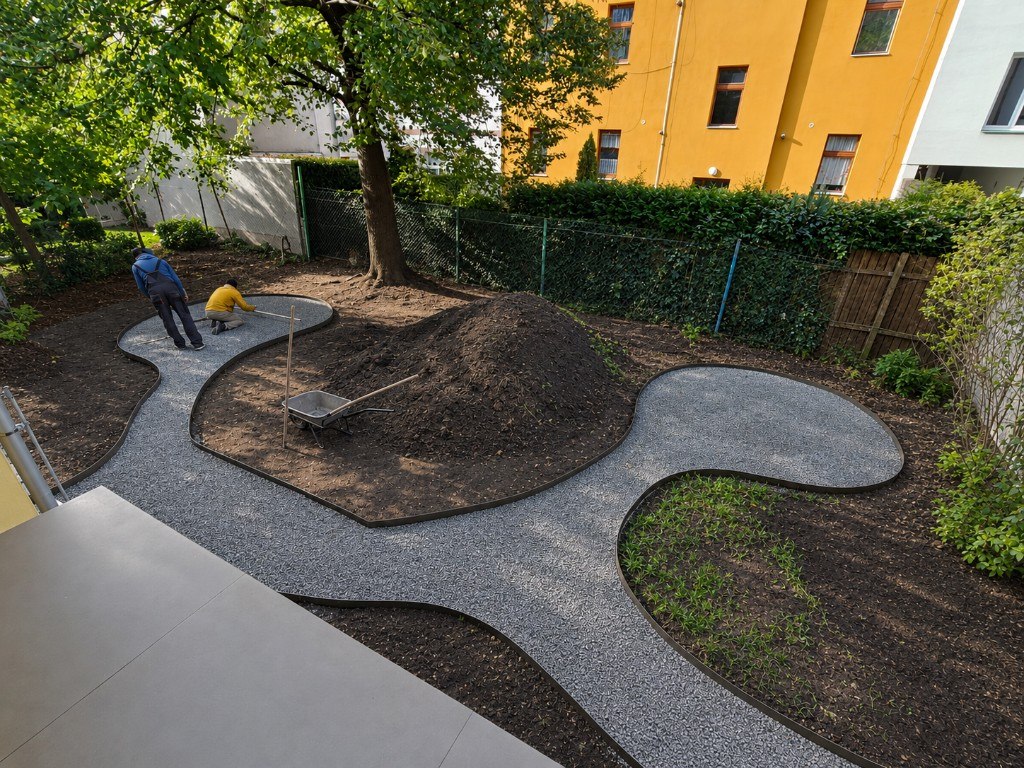
Paths again: gravel underfoot.
The paths themselves got two layers of gravel — first a coarser 16/32 fraction, then a finer “rice” gravel (4/8 mm). Both layers were compacted with a vibrating plate — locally nicknamed the frog.
Under the gravel lie white Covergrid Gravel honeycomb trays (80 × 112 × 3 cm) — laid into the same arcs as the paths, which on a curved layout was not quick work. The aim was a finished surface exactly 2 cm below the edging.
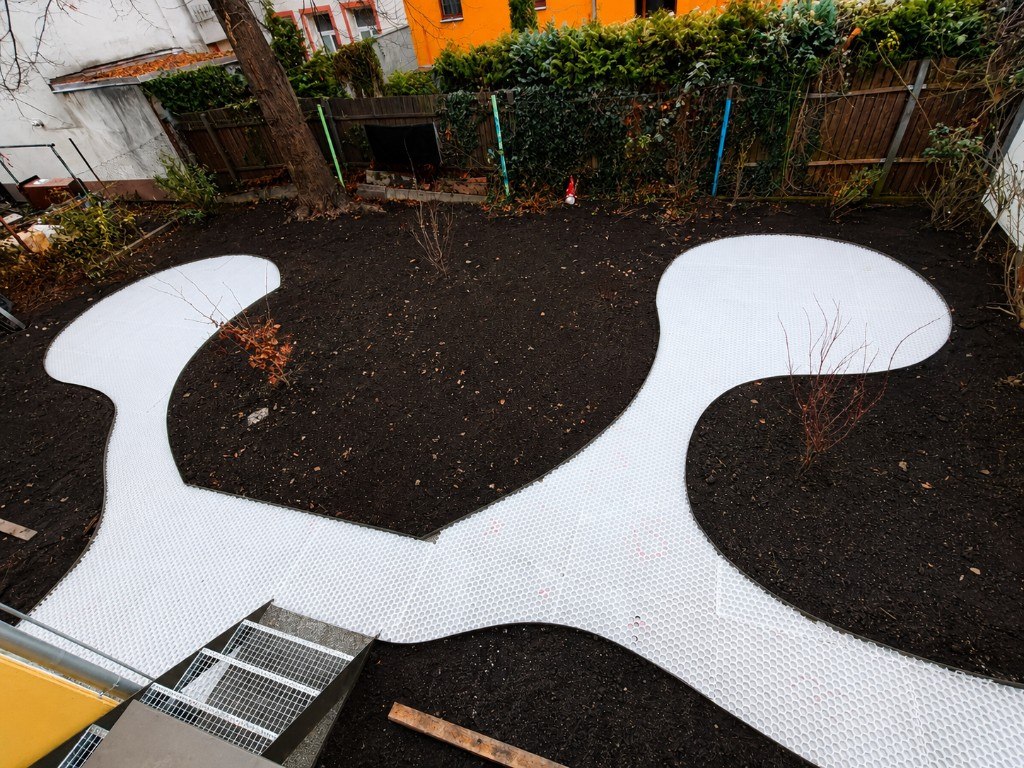
The terraces rose in parallel.
The terraces were built alongside everything else, but had to be finished before the edging so both parts would meet precisely. Which apartments they belong to, and how they work, is described further in Terraces and apartments.
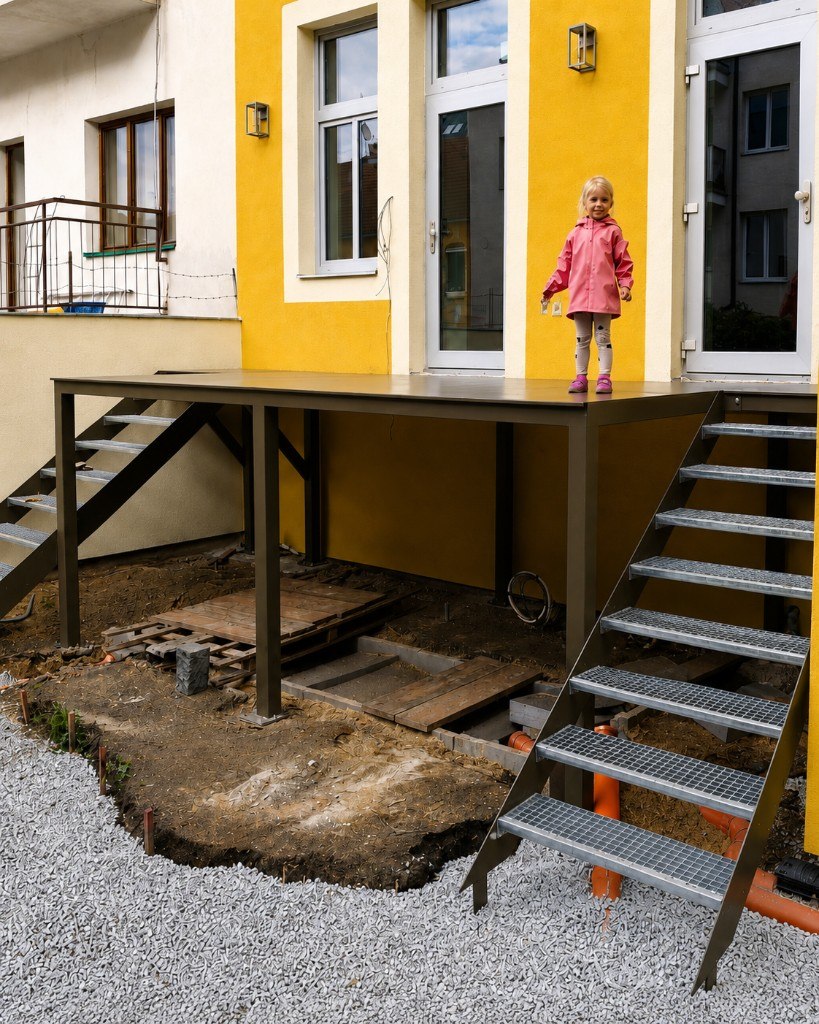
Only then the plants.
Only on soil prepared like this — with water, form, and paths ready — did planting begin, plant by plant to the plan. Some things from the past stayed on purpose: by the back wall, the original roses, more than twenty years old.
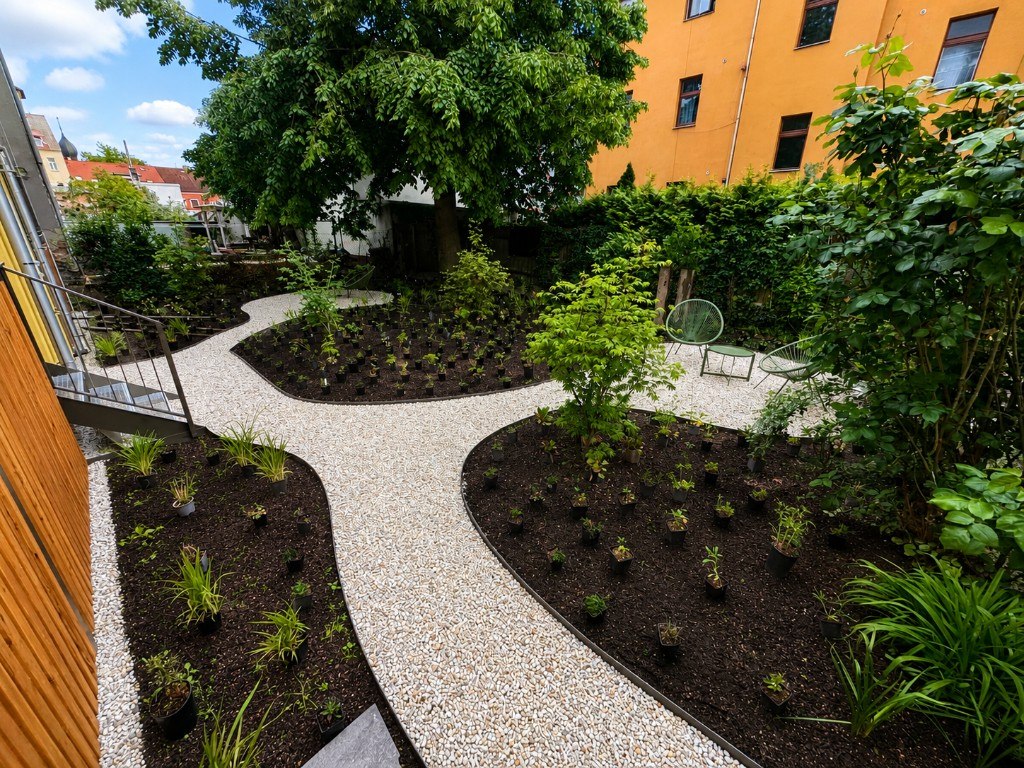
Irrigation — only after planting.
Drip irrigation was laid only after planting — tubing run between plants already in the ground, not into empty soil.
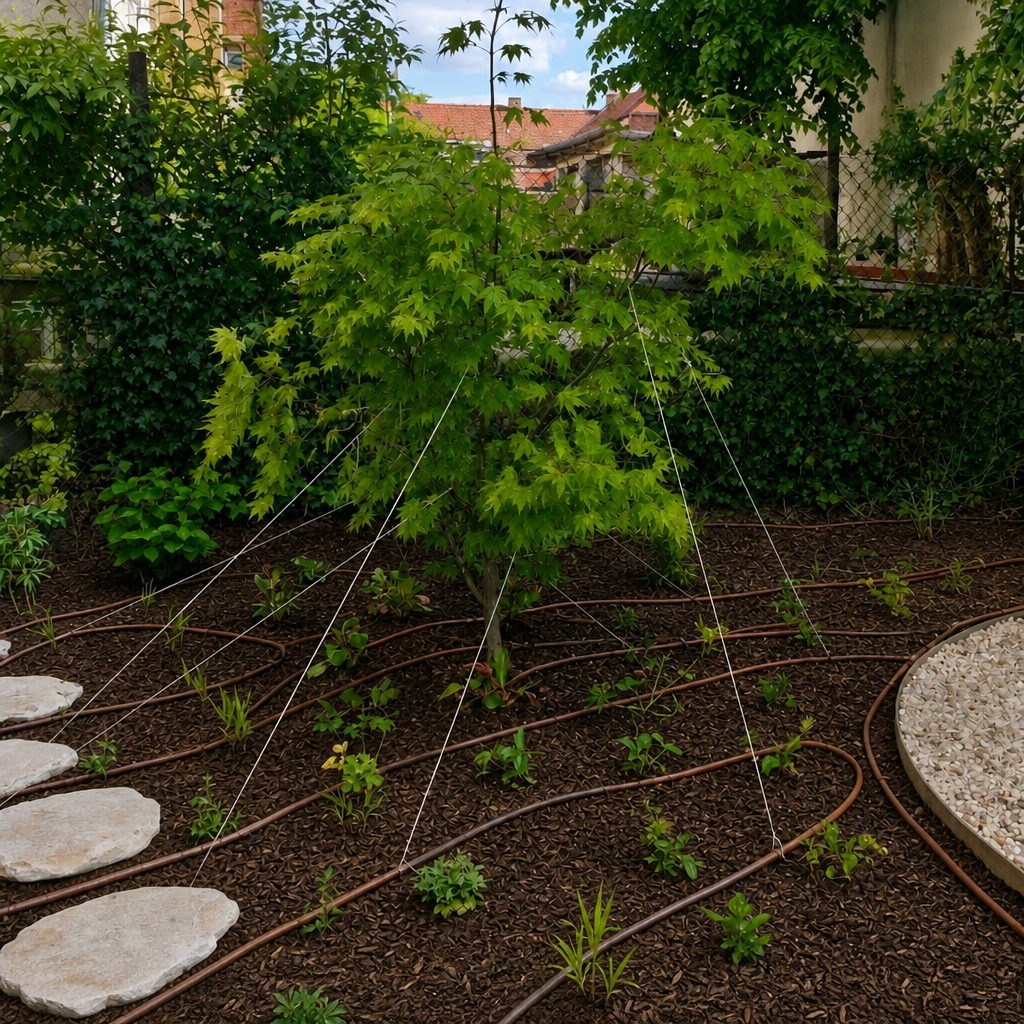
Mulch as the last soil protection.
The last layer above the irrigation is mulch — a mix of bark and mature compost from Soběslav, fetched three times, loaded to overflowing. It holds moisture in the soil and suppresses weeds, so the garden needs less watering and less weeding.
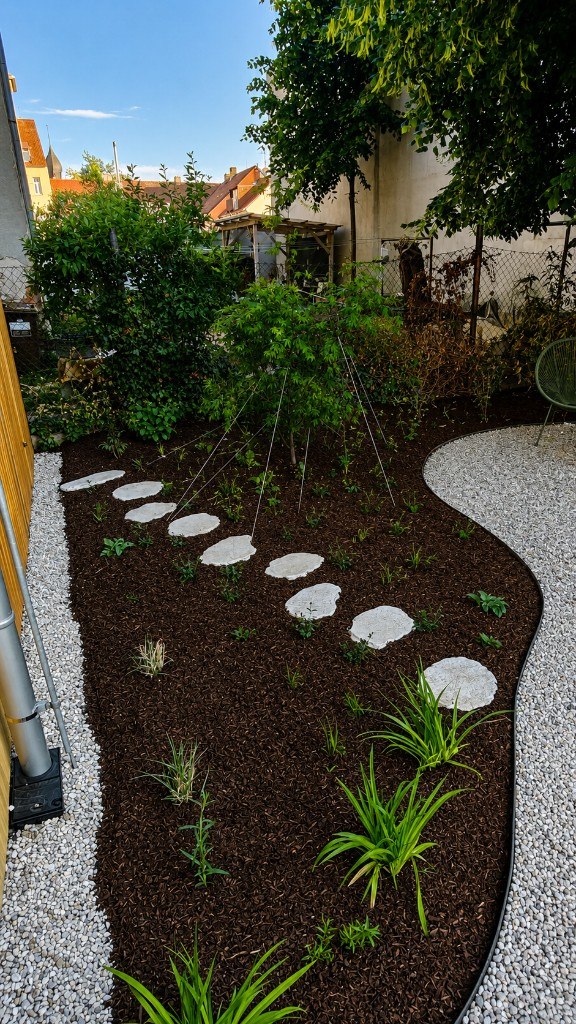
The last layer: light.
The final step was soft evening lighting — gentle light on trunks, along paths, and by the seating, each with its own switch. Not to make the garden glare, but so it keeps its own character at night. Done.


El jardín debe sentirse natural, no complicado. Lo que ve es solo el resultado.
Qué crece — atlas de plantas
25 especies, ordenadas según cuándo merece la pena pararse a mirar.
Desde las primeras floraciones de primavera temprana hasta las que dan estructura al jardín incluso en invierno. Cada planta tiene nombre latino, número de ejemplares y su papel en el jardín — no solo decoración, sino para quien quiera crear un rincón similar.
Plan del jardín
El plan de plantación de todo el jardín — para ver qué hay dónde.

Late winter and spring
the garden’s first awakening
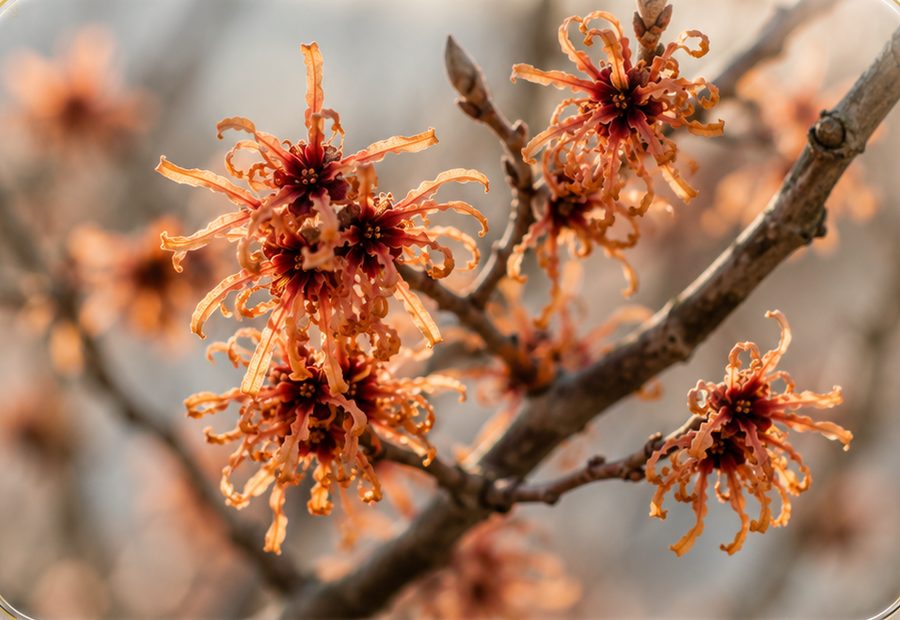
Witch hazel
Hamamelis × intermedia ‘Aphrodite’
Blooms in the quietest season — orange fringes on bare branches before anything else starts.
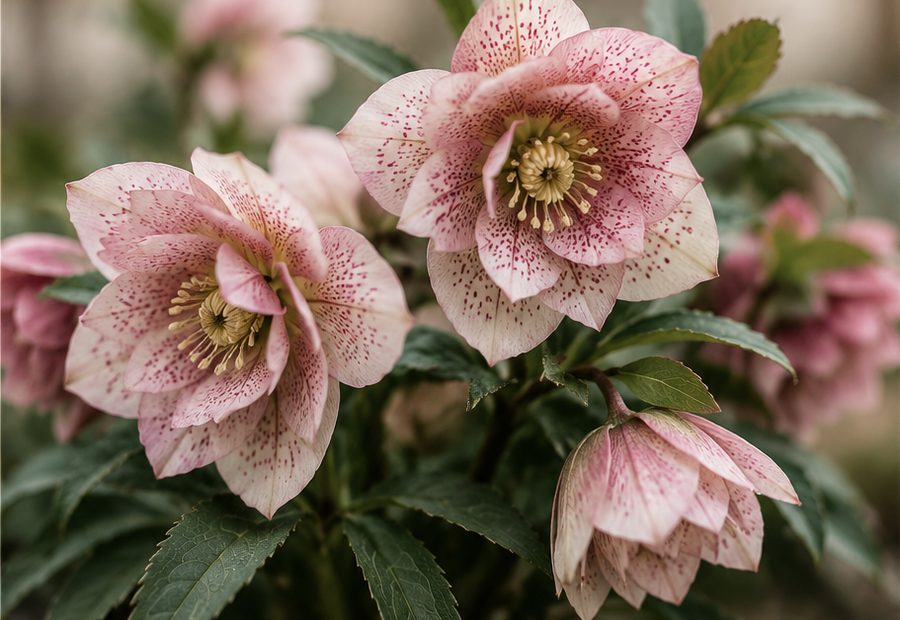
Lenten rose
Helleborus orientalis ‘Double Ellen Pink Spotted’
Double-flowered, blooms in late winter — the first colour after cold, often before the last snow melts.
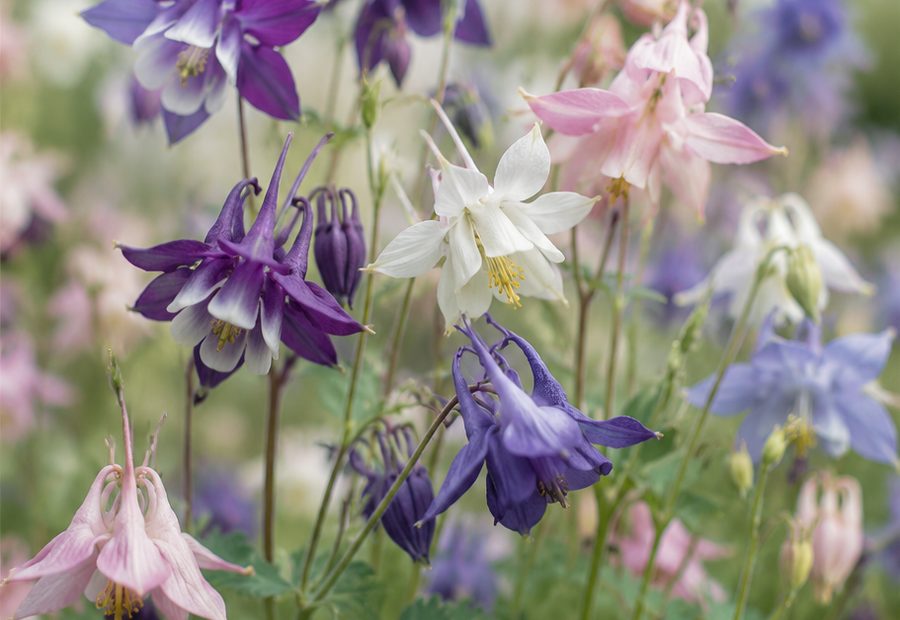
Columbine
Aquilegia vulgaris, mix
Delicate spring flowers in a soft mix of colours. Brightens the bed before summer takes over.
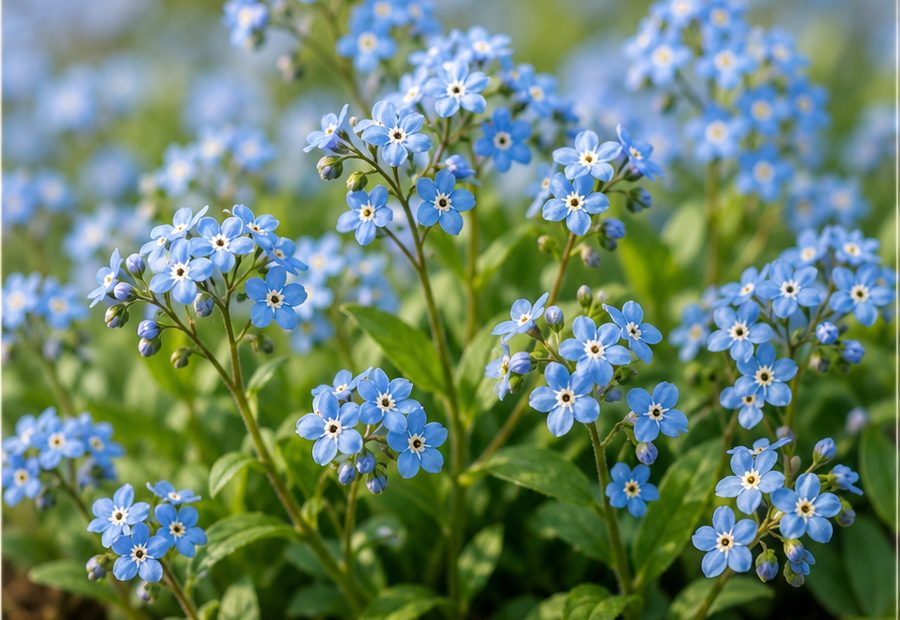
Blue-eyed Mary
Omphalodes verna
Low spring groundcover with tiny blue flowers. Covers the soil until taller perennials fill in.
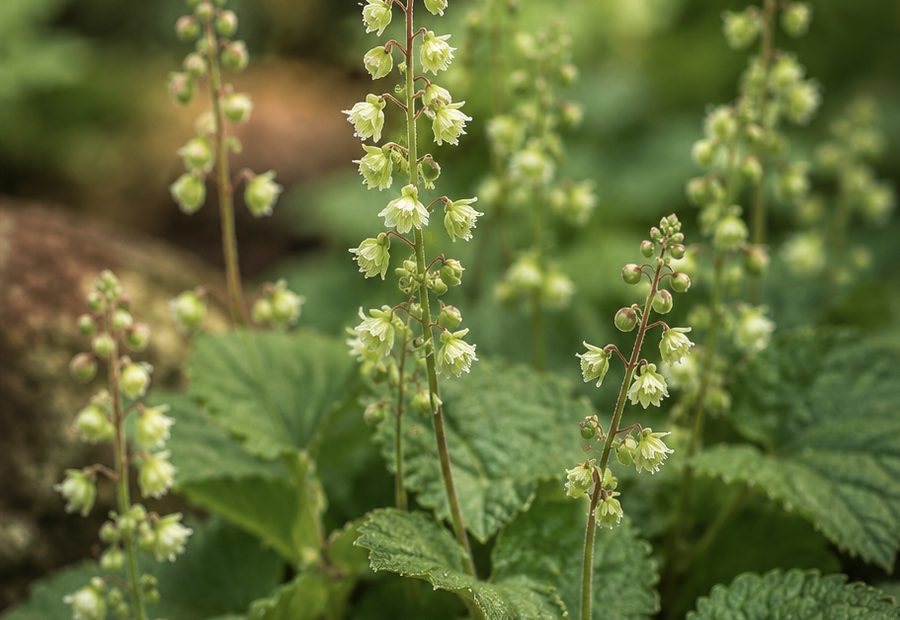
Fringe cups
Tellima grandiflora
Shade-tolerant underplanting with fine candelabras of small flowers. Softly fills the lower tier.


Summer · I
main flowering
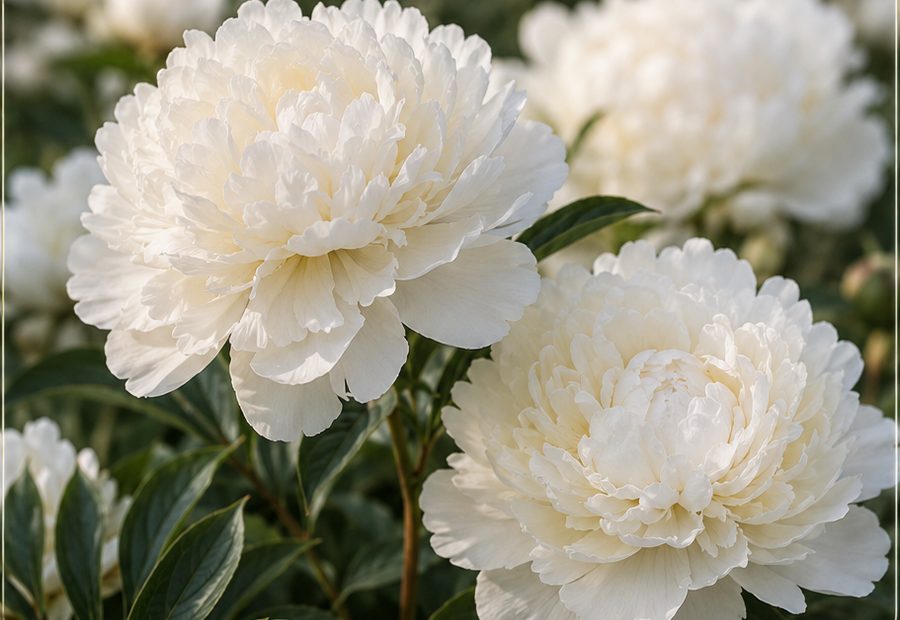
Peony
Paeonia lactiflora ‘Duchesse de Nemours’
Full white fragrant blooms in early summer. Five plants as a deliberate, rarer accent.
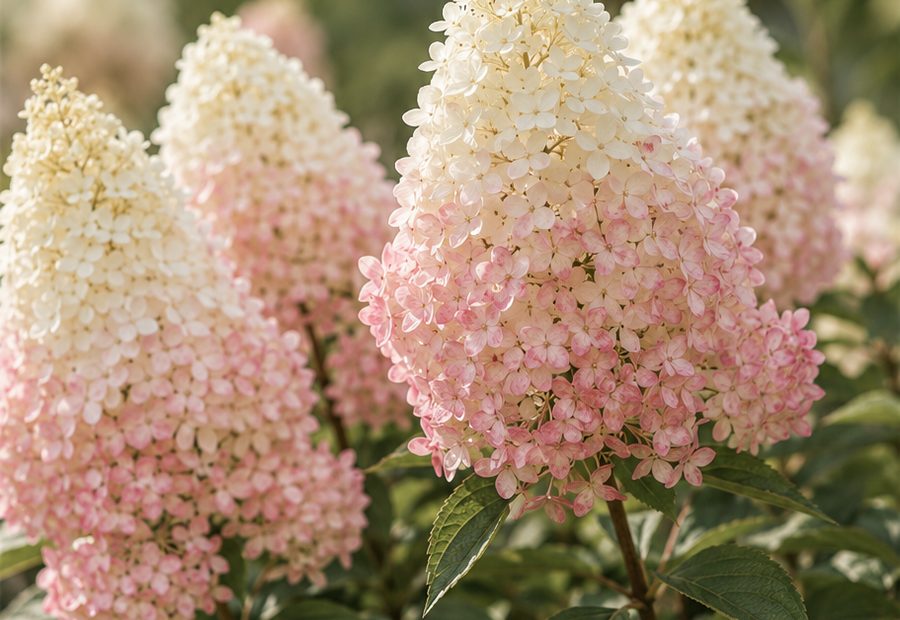
Panicle hydrangea
Hydrangea paniculata ‘Early Sensation’
Early flowering. White panicles gradually turn pink and hold colour deep into summer.
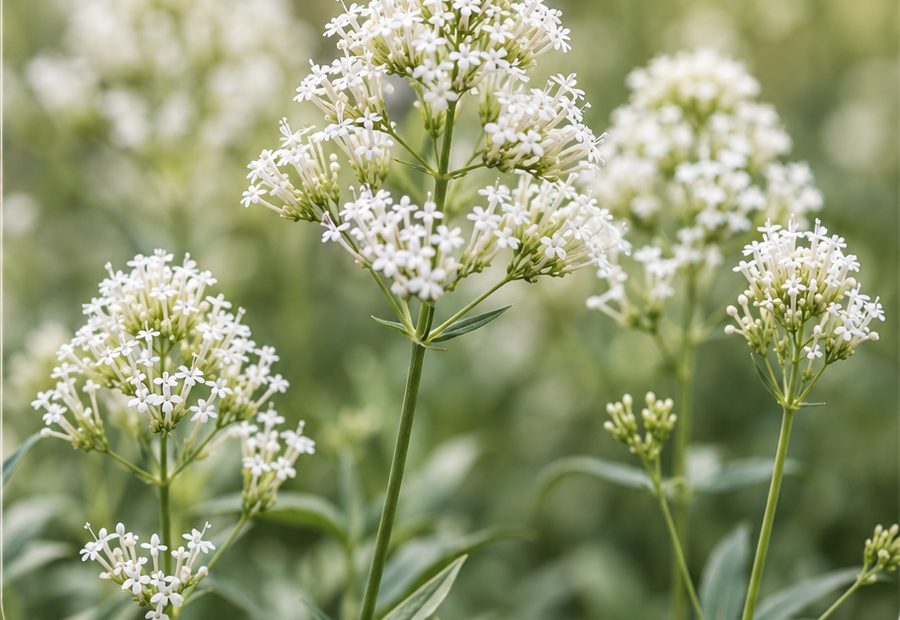
Red valerian
Centranthus ruber ‘Albus’
White form, long-flowering and undemanding. Tolerates drought and stone.
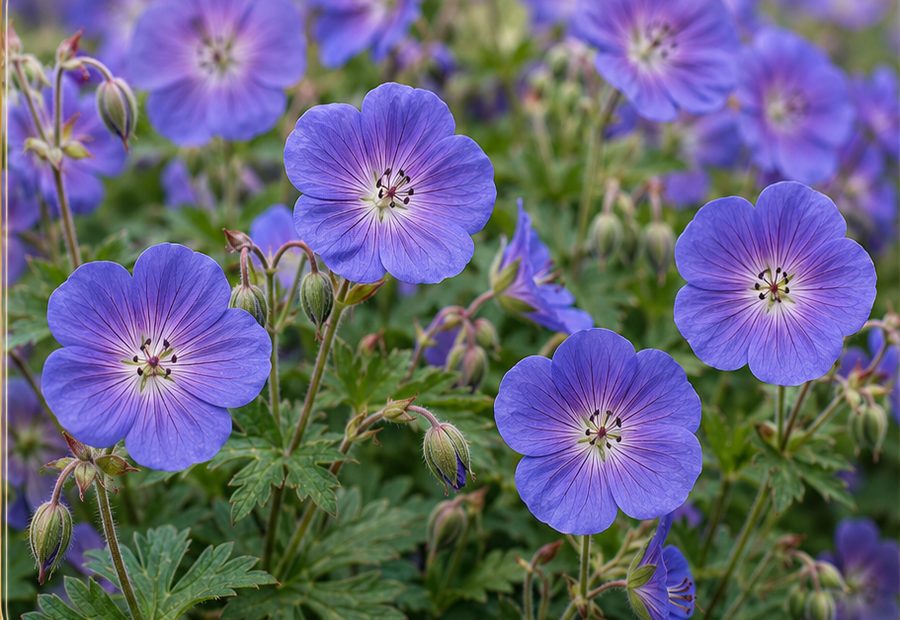
Cranesbill
Geranium ‘Rozanne’
Blue-violet, blooms without pause from summer into autumn. A quiet workhorse of the beds.
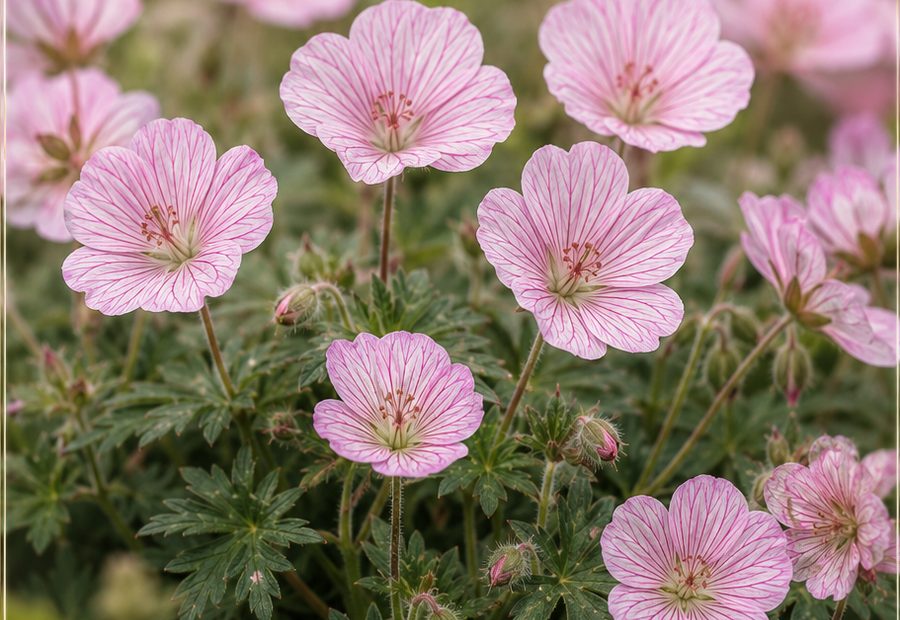
Bloody cranesbill
Geranium sanguineum var. striatum
Low and softly pink. Holds the edges of the beds so nothing feels empty.


Summer · II
another summer layer

Daylily
Hemerocallis ‘Crimson Pirate’
Each red flower lasts a single day, but blooms in long waves — the bed stays colourful for weeks.
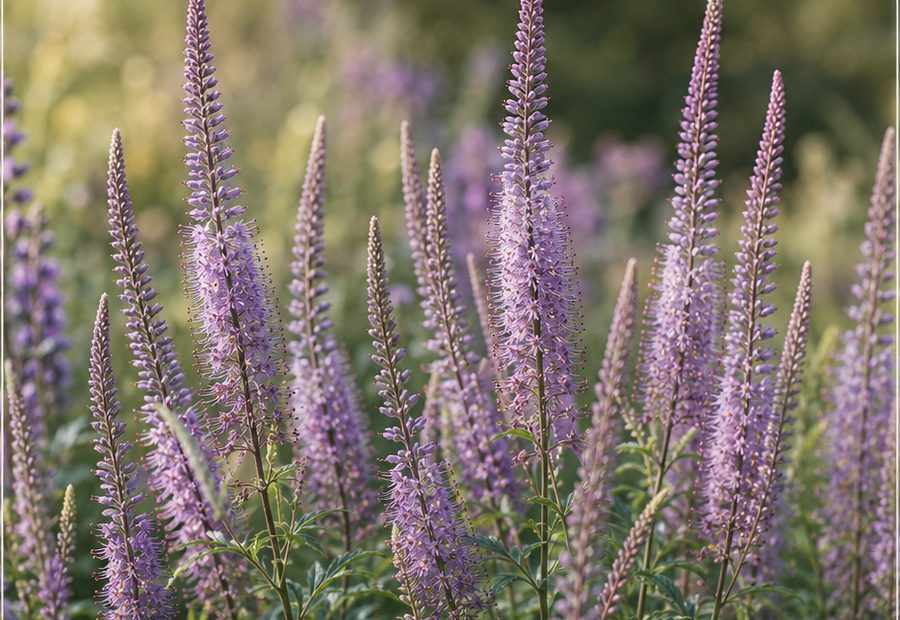
Culver’s root
Veronicastrum sibiricum ‘Amethyst’
Tall slender flower spikes in summer — giving the bed height and rhythm.
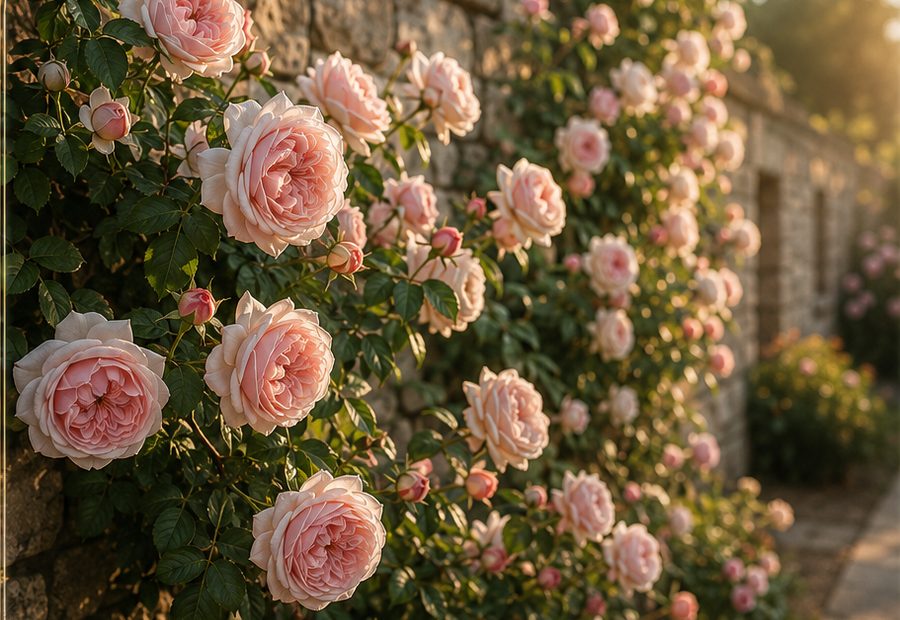
Historic roses
by the rear stone wall · existing
More than twenty years old, here before the whole project. The point was not to replace them, but to keep them — the garden was designed around them so they could stay.
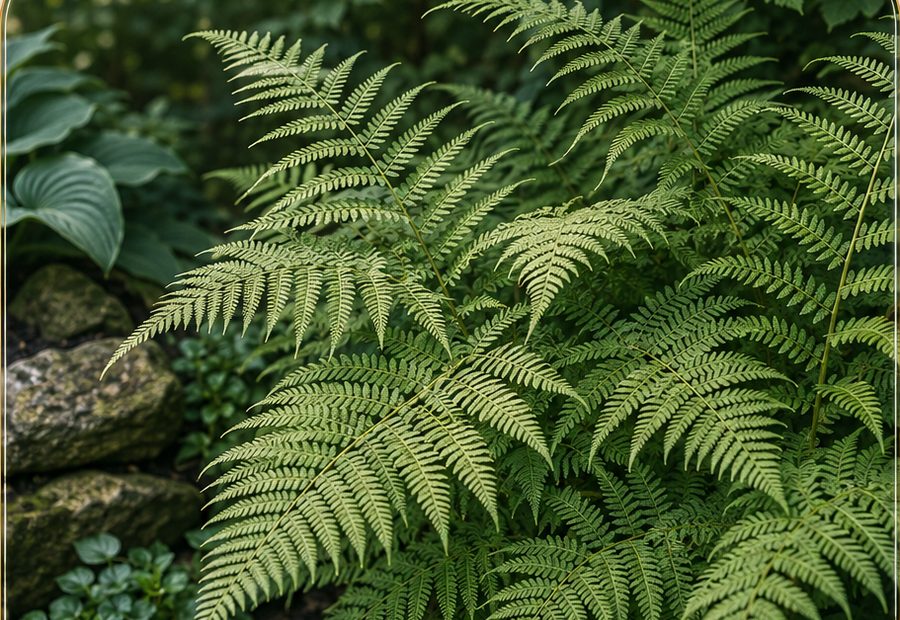
Lady fern
Athyrium filix-femina
A fine fern for shady spots. Soft structure where perennials would not thrive.

Japanese forest grass
Hakonechloa macra ‘Albostriata’
Soft cascading grass that brightens shade and moves the bed even without wind.


Autumn
the year’s second peak
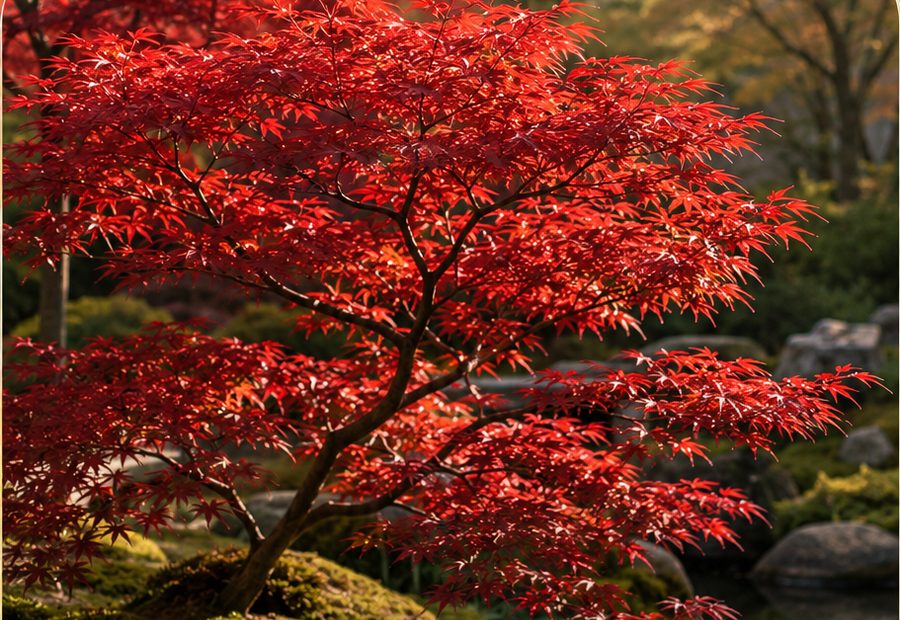
Japanese maple
Acer palmatum ‘Osakazuki’
The backbone of the planting. Calm green all summer, then a deep scarlet blaze in autumn. The rest of the beds are composed around it.
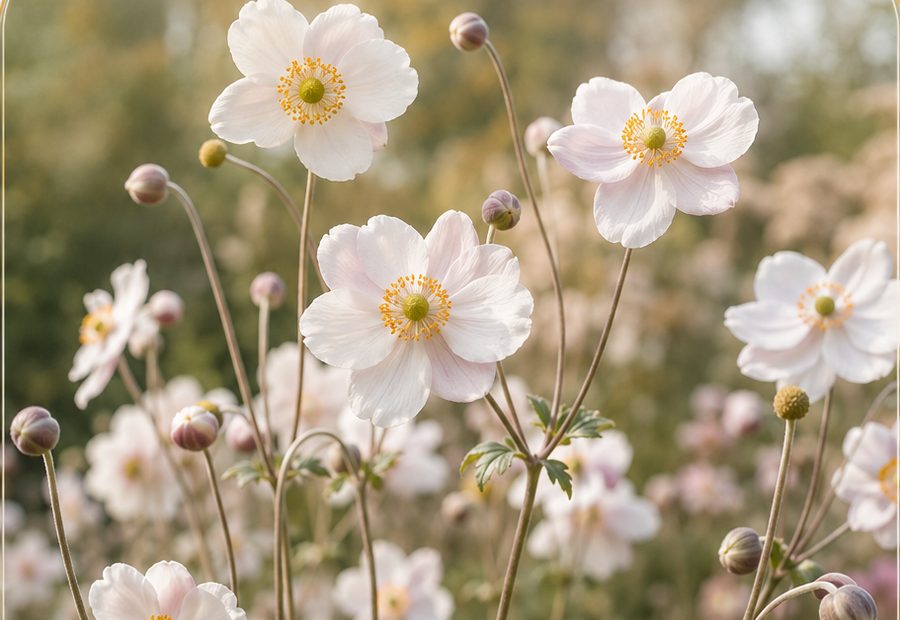
Japanese anemone
Anemone × hybrida ‘Andrea Atkinson’
White flowers on tall slender stems, blooming late — when most of the bed is already fading.
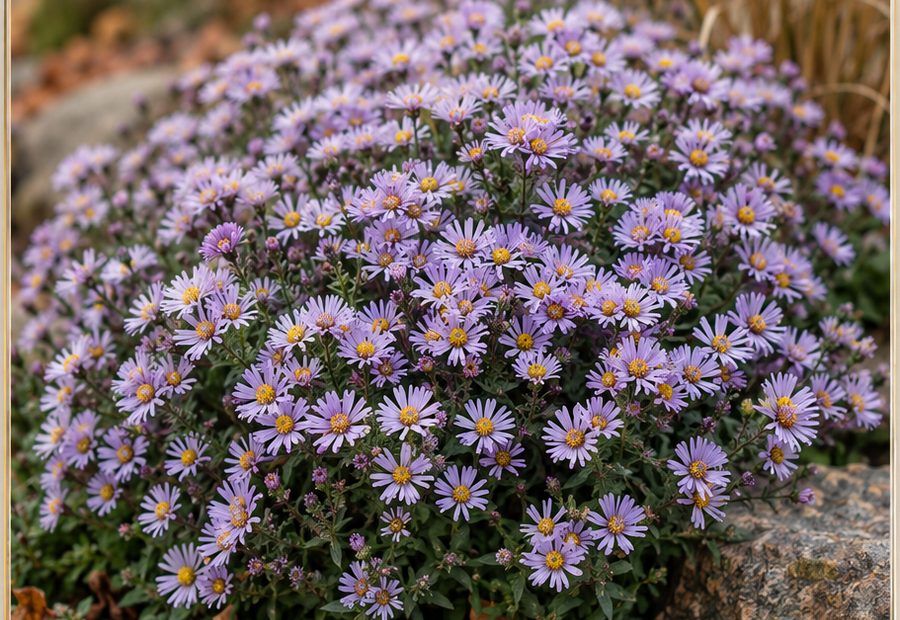
Aster
Aster ageratoides ‘Adustus Nanus’
Low and densely flowering. Part of the last wave of colour before winter.
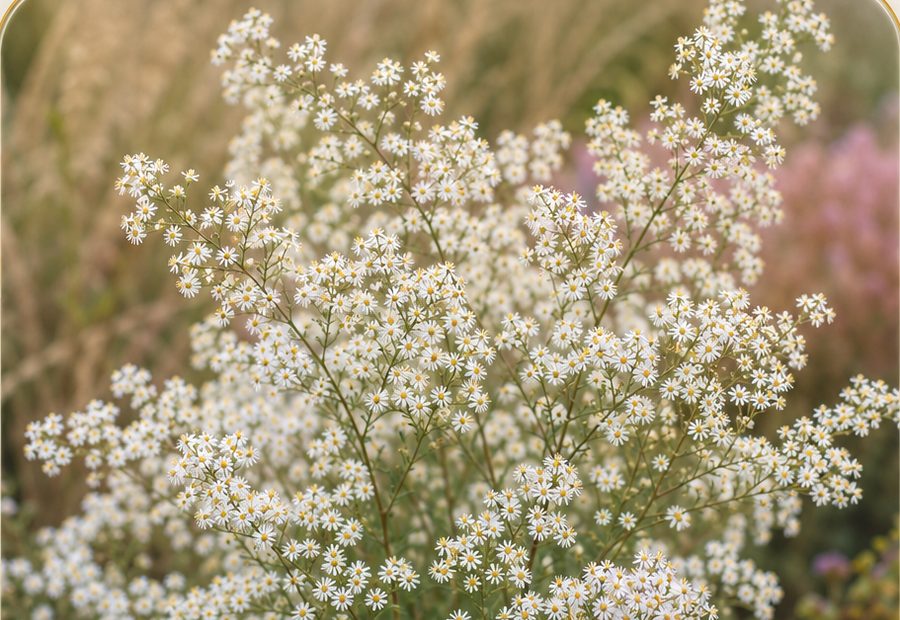
Heath aster
Aster ericoides ‘Schneetanne’
Covered in tiny white flowers in late autumn.
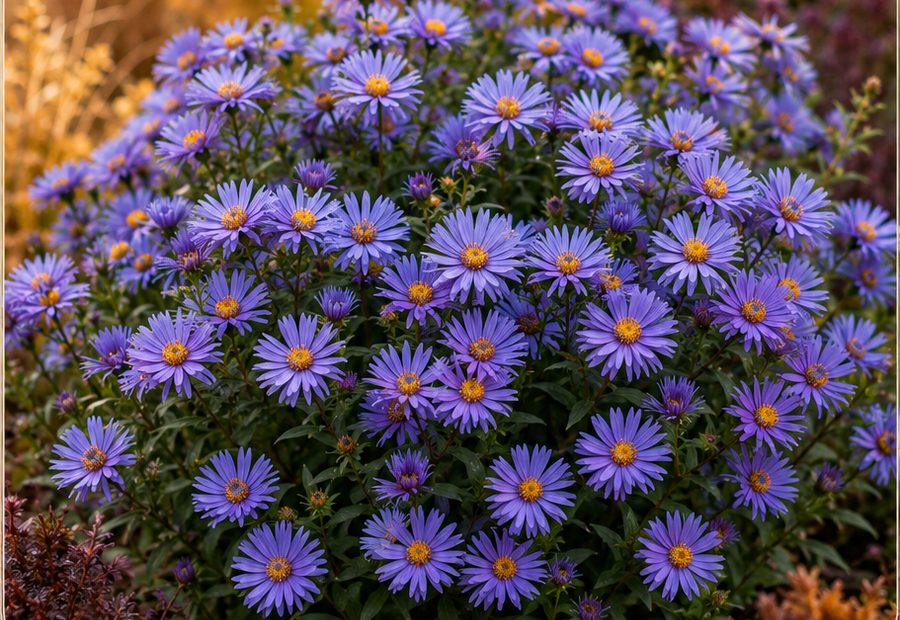
Aster
Aster oblongifolius ‘October Skies’
Blue-violet, flowering — as the name suggests — into October.


Year-round structure
holds the garden beyond peak bloom
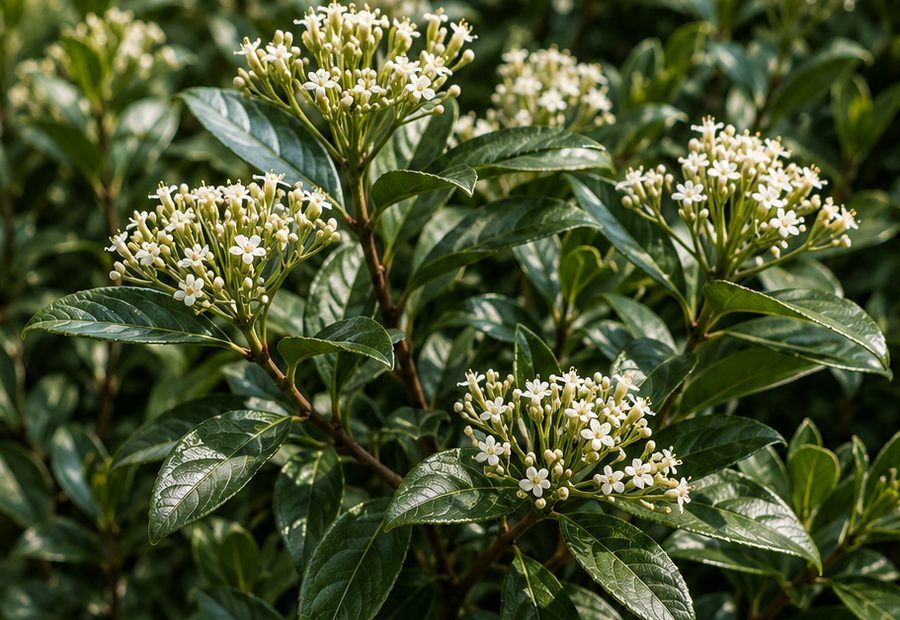
Viburnum
Viburnum ‘Pragense’
Evergreen backdrop that calms and closes the view — something for the rest of the bed to lean on.
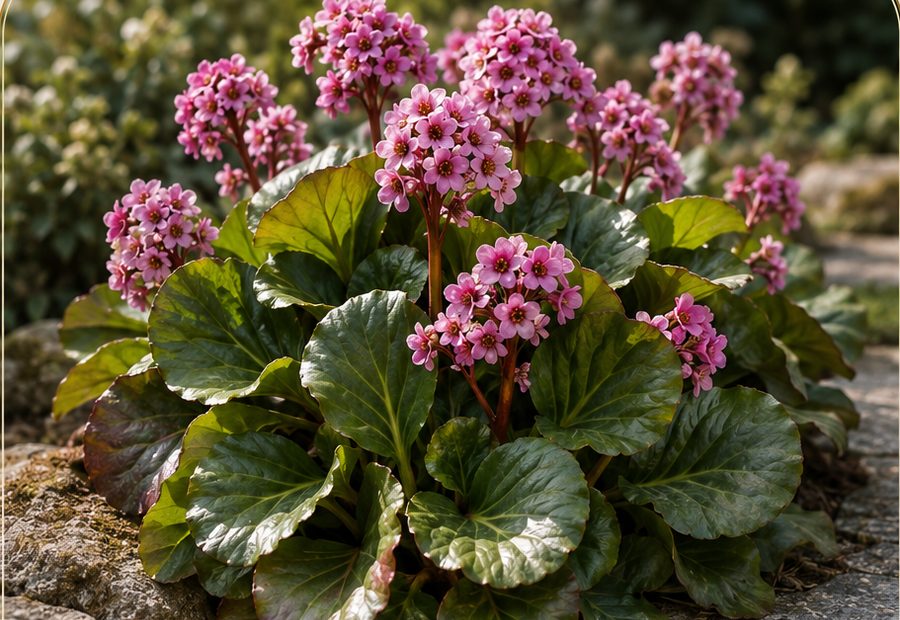
Bergenia
Bergenia ‘Bach’
Leathery evergreen leaves hold structure all year; in spring they add a pink flower.
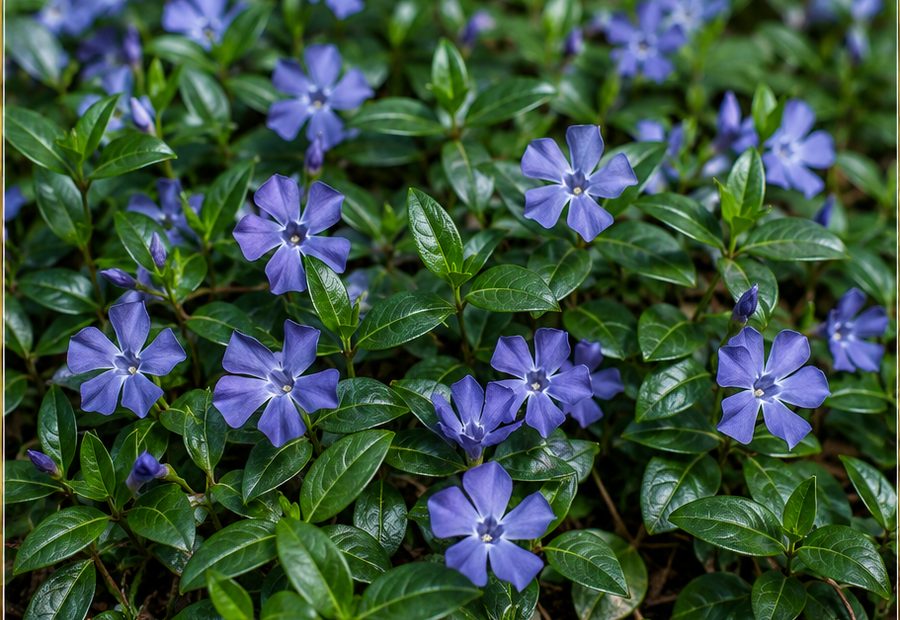
Lesser periwinkle
Vinca minor ‘Elisa’
The most numerous plant in the garden. An evergreen carpet that ties everything together.

Chinese silver grass
Miscanthus sinensis ‘Yakushima Dwarf’
A lower miscanthus. Gives the garden structure after perennials fade — and catches soft light in the evening.

Fountain grass
Pennisetum alopecuroides ‘Hameln’
Soft cylindrical plumes that play in light and wind. Peaks in autumn.


La última capa
Cuando cae la noche, el jardín adopta una segunda forma.
Iluminación suave al atardecer de troncos, caminos y asientos — cada uno con su interruptor. De día se notan sobre todo el verde y los caminos; por la noche empiezan a actuar los árboles, las terrazas y una calma menos presente de día.


Cuando quiera saber más
Esto no es una guía paso a paso. Más bien una prueba de que se puede hacer.
A propósito no lo escribimos como procedimiento exacto — cada jardín es distinto y cada parcela pide algo propio. Pero si alguna capa le interesa con más detalle, estaremos encantados de compartirla. Escríbanos con su pregunta o pase durante su estancia — le mostraremos cómo está realmente montado.
Escríbanos: info@vivienapartments.cz Llame: +420 702 153 573
Antes de seguir